

How to Inherit a 3% Rate Without Breaking Your 1031
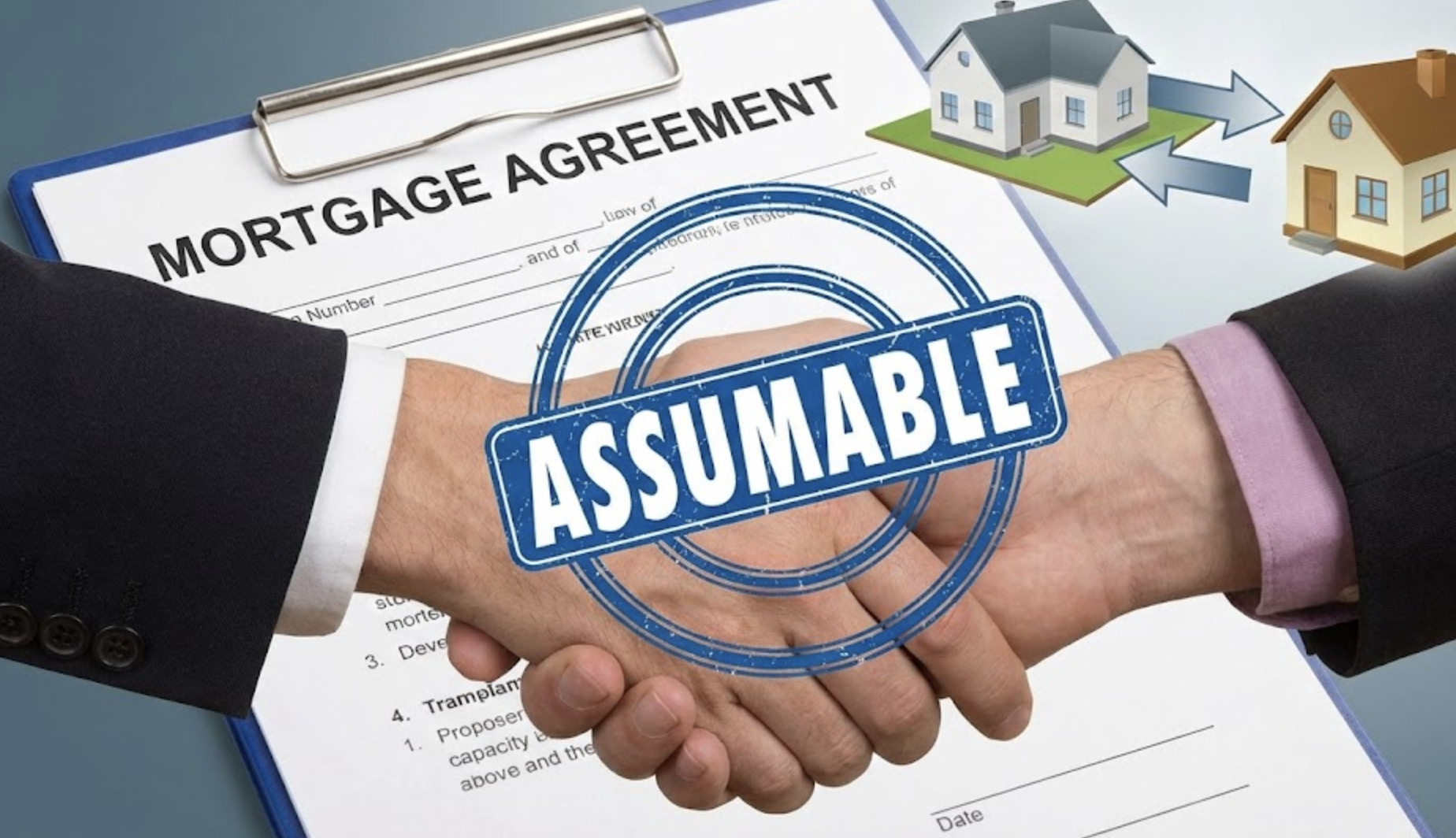
In the current real estate landscape, where commercial mortgage rates have settled in the 6.5% to 7.5% range, an existing loan written in 2021 at 3.5% is no longer just a liability—it is an asset. In some cases, the loan itself is more valuable than the building.
For the 1031 exchange investor, assuming a low-interest mortgage seems like the perfect play: you get a higher cash-on-cash return and better debt service coverage.
But there is a catch.
Assuming a loan in the middle of a 1031 exchange is like trying to change a tire on a moving car. The timelines of bank approvals often clash with IRS deadlines, and the mechanics of "Debt Replacement" can trigger unexpected taxes.
This article breaks down the high-stakes game of loan assumption and how to navigate the "Equity Gap" without failing your exchange.
The Core Conflict: IRS Deadlines vs. Bank Bureaucracy
The single biggest risk in an assumable mortgage exchange is time.
- IRS Rule: You must close on your replacement property within 180 days of selling your old one.
- Bank Reality: The approval process for assuming a Commercial Mortgage-Backed Security (CMBS) or Agency loan often takes 60 to 120 days.
If you identify a property on Day 45 and the special servicer (the entity managing the loan) drags their feet until Day 181, your exchange dies. You pay all the taxes.
The Strategy: If you plan to assume a loan, you cannot wait until you sell your old property to start the process. You must be under contract and effectively "pre-approved" for the assumption before you even list your relinquished property, or you must negotiate a timeline extension with the seller that allows you to delay closing (though the IRS clock waits for no one).
The "Mortgage Boot" Trap
The second danger is the Debt Replacement Rule. To defer all taxes, you must have:
- Equal or greater purchase price.
- Equal or greater debt (or replace debt with cash).
The Scenario:
- You sell a building for $2M with a $1.2M mortgage (60% LTV).
- You find a replacement property for $2M with an assumable loan of only $800k (40% LTV), because the previous owner paid it down over time.
If you simply assume the $800k loan and use your $800k of exchange cash, you are short. You have $400k of "Debt Relief" (Mortgage Boot).
- The Fix: You must bring $400k of extra cash (from your savings, not the exchange) to the table to fill the hole. This counts as "Cash-in" and offsets the mortgage boot.
- The Takeaway: Assumable loans often have lower balances than new loans. Be prepared to bring heavy cash to the closing table.
The "Equity Gap" Problem
This is the practical deal-killer. Because property values have risen since the original loan was written, the "Loan-to-Value" (LTV) on an assumable loan is often very low—sometimes 30% or 40%.
If you are buying a $5M property with a $2M assumable loan, you need $3M in equity.
- Most 1031 investors are moving equity from a highly leveraged sale and don't have that kind of cash ratio.
- Supplemental Financing: You might think, "I'll just get a second mortgage for the difference." Stop. Most commercial loans (especially CMBS and Fannie/Freddie) strictly forbid "secondary indebtedness." They will not allow you to put a second mortgage behind them. You must bring cash or preferred equity (which is expensive).
CMBS Loans: The Most Common Target
In the commercial space, CMBS (Conduit) loans are the most frequently assumed. They are designed to be assumable, but they come with a "gatekeeper" known as the Special Servicer.
The Costs:
- Assumption Fee: Usually 1% of the remaining loan balance. (e.g., $20,000 on a $2M loan).
- Legal Fees: You pay for your lawyer and the servicer's lawyer. This can easily run $15,000–$25,000.
- Review Fees: Non-refundable application fees of $5,000+.
The "Bad Boy" Carve-Outs: Even though CMBS loans are "non-recourse" (they can't come after your personal assets if you default), you will still have to sign a "Bad Boy Guarantee." This makes you personally liable if you commit fraud, waste, or file bankruptcy.
"Subject To" vs. Assumption (Warning)
Some aggressive gurus will tell you to just buy the property "Subject To" the existing mortgage—meaning you take the deed, but leave the loan in the seller's name without telling the bank.
Do NOT do this in a 1031 exchange.
- Due-on-Sale Clause: Banks have software that tracks deed transfers. If they see the deed change hands, they can call the loan due immediately. If the loan is called, your 1031 exchange could be jeopardized or you could face foreclosure.
- IRS Validity: In a "Subject To" deal, you don't legally owe the debt. A strict IRS auditor could argue you haven't technically replaced the debt because you aren't the borrower of record. This creates a massive boot issue.
People Also Ask (FAQ)
Does assuming a loan count as "debt replacement"? Yes. Assuming an existing liability counts exactly the same as getting a new loan. If you assume a $1M mortgage, the IRS treats it as if you borrowed $1M.
Can I assume a VA loan in a 1031 exchange? Rarely. VA loans are for primary residences. While a non-veteran investor can technically assume a VA loan, the original veteran borrower usually won't let you, because their "entitlement" stays tied up in the property until the loan is paid off. They can't get a new VA loan until you refinance.
How long does a commercial assumption take? Plan for 90 days. If you are in a 1031 exchange, you should insert a clause in your purchase contract that allows you to extend the closing date if the lender delays (though you cannot extend the IRS 180-day deadline).
What is a "Defeasance" and does it affect me? Defeasance is the penalty the seller pays to get out of a CMBS loan. If you assume the loan, the seller avoids this massive penalty. This is your leverage! You can often ask the seller to lower the purchase price because you are saving them hundreds of thousands of dollars in defeasance penalties.
Final Thoughts: The "Yield Maintenance" Leverage
The real value of an assumable loan isn't just the interest rate—it's the leverage it gives you over the seller.
Key Takeaway: Sellers with CMBS loans are often "trapped" by massive prepayment penalties (Yield Maintenance). They cannot sell to a normal buyer without losing a fortune. If you are willing to assume their loan, you are their savior. Use this.
- Demand a lower purchase price.
- Demand that they cover the assumption fees.
- Demand that they pay for the lease audit.
You are solving their problem; make sure the price reflects that.


.jpg)


