The "Gross Price" Tax Trap: Why You Might Bring Cash to Your Own Sale
For international investors, US real estate is a safe haven. But when it comes time to sell, that haven often turns into a trap known as FIRPTA (Foreign Investment in Real Property Tax Act).
Unlike US citizens, who file a tax return in April and pay their capital gains tax then, the IRS does not trust foreign sellers to pay up. They fear the seller will collect the cash, fly back to their home country, and ghost the US Treasury.
To prevent this, the IRS deputizes the Buyer as their tax collector.
Under FIRPTA, the buyer is required to withhold 15% of the Gross Sale Price (not the profit) and send it directly to the IRS.
In 2026, with property values high and loan-to-value (LTV) ratios often sitting at 60–70%, a 15% withholding on the gross price can wipe out your entire net cash proceeds. You might arrive at the closing table expecting a check, only to be told you need to write one just to pay the withholding.
This article details how FIRPTA works, how it destroys 1031 exchanges if unplanned, and the specific forms you need to file to get your money back.
The Core Rule: 15% of the Price (Not the Gain)
FIRPTA is a blunt instrument. It applies to any "Foreign Person" (non-resident alien, foreign corporation, or foreign partnership) selling a US Real Property Interest.
The Math of the Trap:
- Sale Price: $1,000,000
- Mortgage Payoff: $800,000
- Closing Costs: $50,000
- Actual Equity (Profit): $150,000
The FIRPTA Hit:
The IRS requires the buyer to withhold 15% of $1,000,000.
- Withholding Amount: $150,000
The Result:
- The title company pays off the bank ($800k).
- The title company sends $150k to the IRS.
- The title company pays the broker ($50k).
- You: You receive $0. In fact, you are short $50,000 for closing costs. You have to wire $50,000 into the deal just to sell it.
Note: You didn't actually owe $150k in taxes. Your actual tax on the $150k gain might only be $30k. But the IRS holds the full $150k until you file a tax return the following year to claim a refund.
The 1031 Collision: Deferral vs. Withholding
This is where sophisticated investors get hurt.
You plan to do a 1031 Exchange to defer all your taxes. Since you owe $0 tax, you assume there should be $0 withholding.
The IRS View: "We don't know if you will successfully complete the exchange. Withhold the money anyway."
If the buyer withholds the 15% and sends it to the IRS, your exchange is dead.
Why? Because that cash is now at the US Treasury, not in your Qualified Intermediary (QI) account. You will be short on funds to buy your replacement property, triggering "Cash Boot" and a tax bill.
The Solution: The Withholding Certificate (Form 8288-B)
To save the exchange, you must apply for a Withholding Certificate before the closing date.
- You submit Form 8288-B to the IRS, proving that you are doing a 1031 exchange and therefore your tax liability is $0.
- The "Escrow Hold" Strategy: You cannot wait for the IRS to approve it (it takes 90+ days). Instead, the buyer keeps the 15% cash in the title company's escrow account—they do not send it to the IRS.
- When the IRS approves the certificate (months later), the title company releases the cash to your QI.
- Crucial 2026 Update: You must file the 8288-B on or before the date of transfer. If you file it one day late, the buyer must remit the funds to the IRS within 20 days.
Exceptions: When is Withholding Not Required?
There are two primary ways to avoid FIRPTA without an 8288-B application.
1. The "Personal Residence" Exemption
If the Buyer is an individual who intends to use the property as a residence (for at least 50% of the time the property is occupied for the first two years):
- Sale Price under $300,000: 0% Withholding.
- Sale Price $300,000 – $1,000,000: 10% Withholding (Reduced rate).
- Sale Price over $1,000,000: 15% Withholding (Standard rate).
Warning: You cannot force the buyer to sign the affidavit of residence. If they are an investor or buying in an LLC name, this exemption does not apply.
2. The "Domestic Corp" Exemption
FIRPTA applies to foreign sellers. It does not apply to US sellers.
- If a German citizen owns the property directly $\to$ FIRPTA applies.
- If a German citizen owns a US LLC (disregarded entity) that owns the property $\to$ FIRPTA applies. (The IRS looks through the LLC to the foreign owner).
- If a German citizen owns a US C-Corporation (Blocker Corp) that owns the property $\to$ FIRPTA does NOT apply. The seller is a US Corporation. (However, the C-Corp pays corporate tax, which brings its own disadvantages).
State Withholding: The "CalFIRPTA" Pile-On
If you sell in California, the state wants its cut, too.
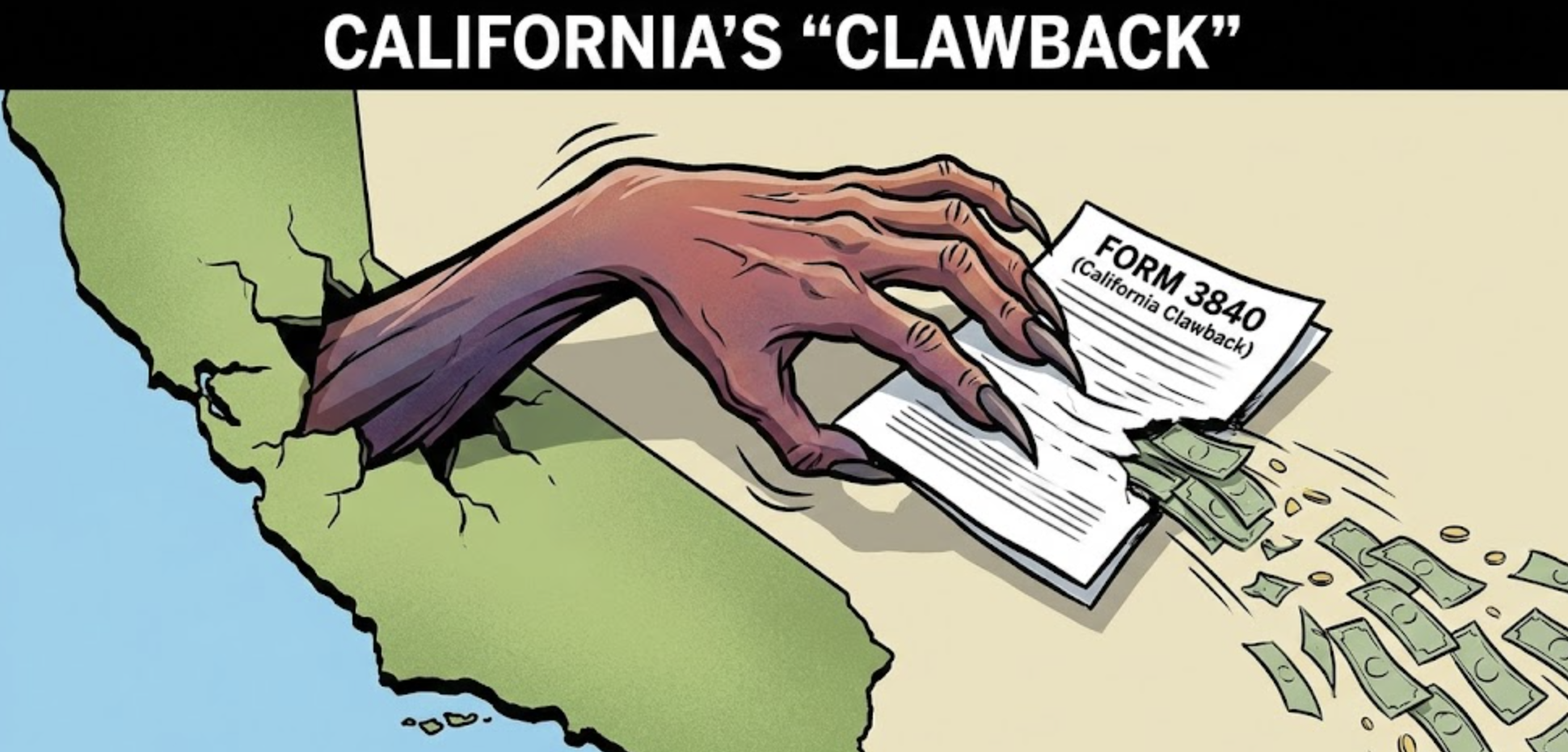
CalFIRPTA requires withholding of 3.33% of the gross sales price on sales by non-residents (including non-California US residents).
- The Combo: Between Federal (15%) and State (3.33%), you are facing an 18.33% withholding on the gross price.
- Unlike Federal FIRPTA, California is stricter about granting waivers for 1031 exchanges (Form 593). You must ensure your QI is experienced with the California Franchise Tax Board rules to avoid a clawback.
2026 Procedural Update: Electronic Payments (EFTPS)
As of late 2025, the IRS has aggressively moved toward mandatory electronic funds transfer (EFTPS) for tax deposits.
- Old Way: The title company mailed a paper check with Form 8288.
- New Way: Buyers/Closing Agents are increasingly required to remit FIRPTA withholding electronically.
- Why this matters: If your title company is "old school" and mails a check that gets lost or processed late, the Buyer is liable for penalties. Because the Buyer is liable, they are becoming extremely conservative. They will refuse to release funds or close until they are 100% sure the IRS has been paid.
People Also Ask (FAQ)
I have a Green Card. Am I subject to FIRPTA?
No. If you hold a "Green Card" (Permanent Resident Card) or meet the "Substantial Presence Test" (183 days in the US), you are considered a US Person for tax purposes. You just need to sign a "Non-Foreign Affidavit" (FIRPTA Affidavit) at closing.
Can I get the 15% back if I lost money on the sale?
Yes. If you sold at a loss, you owe no tax. However, the IRS still holds the 15%. You must file a US Tax Return (Form 1040-NR) the following year to claim a refund. It effectively becomes an interest-free loan to the US government for 12–18 months.
Who is responsible if the withholding isn't paid?
The Buyer. If the buyer fails to withhold because the seller lied, the IRS can seize the buyer's new property to satisfy the seller's tax debt. This is why buyers' attorneys are terrified of FIRPTA.
Does a "Single Member LLC" protect me from FIRPTA?
No. If you are a single-member LLC, the IRS disregards the entity. They look at you. If you are foreign, FIRPTA applies.
Final Thoughts: The Pre-Listing Checklist
If you are a foreign investor, you cannot treat a sale as "business as usual."
Key Takeaway:
- Apply Early: If you are doing a 1031, have your CPA draft the Form 8288-B the moment you go under contract.
- Negotiate the Escrow: Ensure the purchase contract includes a clause allowing the title company to hold the funds pending the 8288-B approval, rather than sending them to the IRS immediately.
- Check Your ITIN: You must have a US Individual Taxpayer Identification Number (ITIN) to file these forms. If you don't have one, apply for it (Form W-7) immediately—it takes months to process.